What Industries Benefit Most From AI Agents? (2026 Guide)
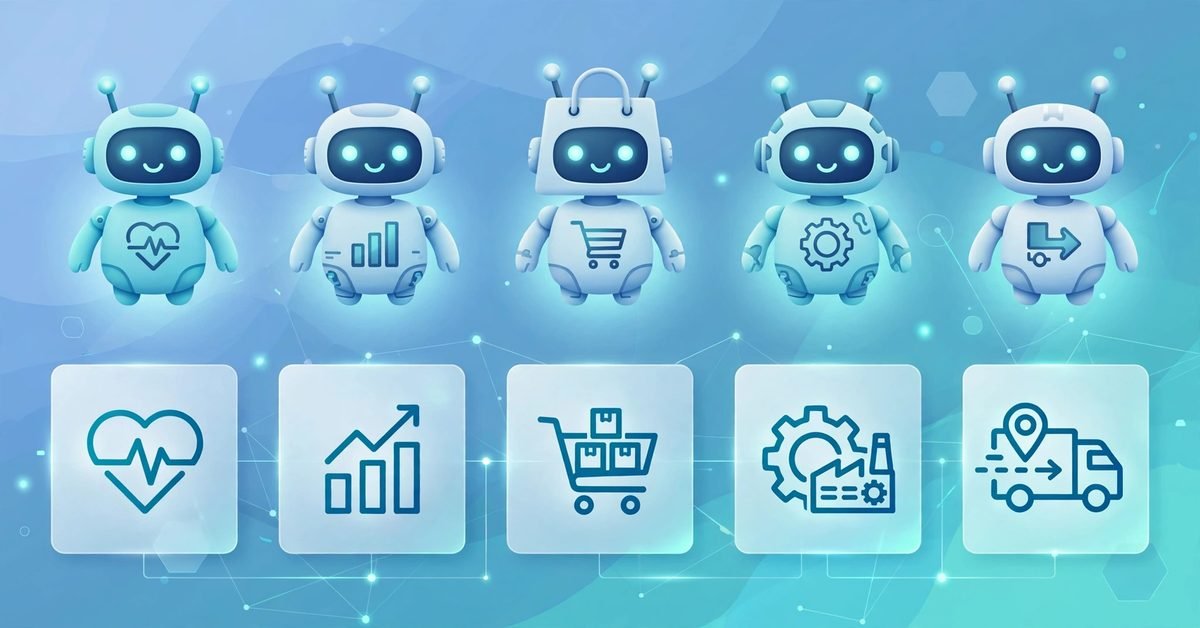
The industries that benefit from ai agents the most are the ones drowning in repetitive, data-heavy work: healthcare administration, finance and fintech, retail and e-commerce, manufacturing and logistics, and professional services. In these sectors, agents don’t just answer questions — they chase paperwork, check records, update systems and follow up, which is exactly where the hours (and the money) leak away.
This guide ranks those industries by where agents actually pay off fastest, gives one concrete agent job per sector, and flags where agents still disappoint. No vendor pitch, no jargon — just what a business owner in the UK, US or Europe needs to know before spending a penny.
What Makes an Industry a Good Fit for AI Agents?
An AI agent is software that can perceive a situation, make a plan, use tools (like your CRM, inbox or booking system) and act on it — then check the result and adjust. That definition tells you exactly when an agent earns its keep. Three tests separate the winners from the rest: the work is repetitive and data-heavy, the agent can take a clear action (send a message, update a record, book an appointment), and the payoff is measurable in hours saved or errors avoided. Industries passing all three see results in weeks; industries failing even one should start much smaller.
Industries That Benefit From AI Agents, Ranked by Payoff Speed
| Industry | Best agent job | Payoff speed |
|---|---|---|
| Healthcare administration | Appointment scheduling, reminders, billing follow-up | Fast |
| Finance and fintech | Fraud checks, compliance checks, customer onboarding | Fast |
| Retail and e-commerce | Order help, recommendations, returns handling | Fast |
| Manufacturing and logistics | Demand forecasting, stock alerts, route planning | Medium |
| Professional services | Document review, research summaries, client follow-up | Medium |
| Education | Tutoring support, grading assistance, admin | Medium |

Healthcare: The Admin Workhorse
Healthcare’s real workload isn’t the medicine — it’s the mountain of admin around it: appointment bookings, insurance checks, patient reminders and billing queries. An agent can chase unconfirmed appointments, send medication reminders and answer routine questions around the clock. As reported by DesignRush’s coverage of McKinsey research, more than 30% of healthcare providers were already using AI and automation across seven revenue-cycle uses in 2025, with potential cost-to-collect reductions of 30–60% — reported figures, not a guarantee for any single clinic. The boundary matters: an agent must never make clinical decisions or give medical advice on its own.
Finance and Fintech: Speed Where Accuracy Matters
Banks, insurers and fintech firms live on checks: is this transaction suspicious, is this document complete, does this customer pass compliance? Agents excel here because the rules are written down and the data is digital. An agent flags unusual transactions for a human reviewer, gathers onboarding documents and answers balance or claims questions without making anyone wait on hold. DesignRush’s coverage of McKinsey research reports fintech firms increasing investigation handling by 15–20% with AI agents in the loop — an industry signal, not a promise. The limitation is regulation: every agent action needs an audit trail and human approval for money movement or lending decisions.
Retail and E-commerce: The Always-On Shop Assistant
Shoppers don’t keep office hours, and that’s exactly why retail benefits so quickly. An agent answers “where’s my order?” at 2am, suggests products from browsing history, handles returns and flags stock problems before they become angry emails. For a small online shop, this often feels like hiring an extra team member. McKinsey estimates reported by DesignRush suggest up to 40% of retail merchants’ time could be freed by offloading manual tasks to agentic AI. The catch: recommendations only work if product data is clean, and a frustrated customer with a damaged delivery still wants a human — so escalation must be one click away.
Manufacturing, Logistics and Professional Services
Factories and delivery firms get quieter wins: agents monitor equipment data to predict breakdowns, forecast demand, warn about low stock and re-plan routes when traffic or weather changes. The payoff takes longer than a chatbot because agents must connect to real operational systems, but one avoided production stoppage can pay for the whole setup. The honest limitation is old, disconnected systems — if your factory still runs on spreadsheets and paper, fix the data foundations before buying an agent.
Law firms, accountants, consultancies and estate agencies run on documents and follow-up, which is equally agent-friendly. An agent can summarise long contracts, pull out key dates for a human to check, draft first versions of client emails and chase unanswered enquiries so no lead goes cold. The boundary matters more than ever: an agent’s summary is a starting point, never legal or financial advice, and a qualified professional must review anything a client relies on. Schools and training providers, meanwhile, do best using agents for practice and admin support — not for grading that decides someone’s future.
Where AI Agents Still Disappoint
Be blunt: agents are bad at genuinely novel problems, emotionally sensitive conversations, and any job where a wrong action is expensive. A wrong answer from a chatbot is embarrassing; a wrong action from an agent — cancelling the wrong order, emailing the wrong client, approving the wrong payment — is costly. That’s why every serious deployment has approval gates: the agent drafts and proposes, a human approves the important stuff. Agents also disappoint when pointed at messy data. If customer records are duplicated or scattered across five tools, the agent will confidently act on bad information. Clean data first, agent second — every time.
How to Pick Your First Industry Use Case
Don’t start with “let’s get an AI agent.” Start with one painful, repetitive job: “chase unconfirmed appointments” beats “do something with AI.” Measure how many hours it takes today and how often it goes wrong, keep a human in the loop approving actions for the first month, and prove one workflow before adding a second. That approach also exposes “agent washing” — vendors selling a dressed-up chatbot as an agent. The test is simple: can it take a real action in your systems, or does it only talk? If it only talks, it’s a chatbot, and it should be priced like one.
Conclusion
So, which industries benefit most from AI agents in 2026? Healthcare administration, finance and retail lead the pack because their work is repetitive, digital and measurable — followed closely by manufacturing, logistics, professional services and education. Wherever people spend their days moving information between systems and chasing follow-ups, an agent can give those hours back. Start with one job, keep a human approving the important actions, and judge the agent on hours saved and errors avoided — not on how impressive the demo looked.
Healthcare administration, finance and fintech, and retail and e-commerce usually see results fastest among the industries that benefit from ai agents. Their work is repetitive, digital and easy to measure, so an agent’s impact shows up in weeks rather than months.
Small businesses can absolutely use AI agents, and in some ways they benefit more because one agent can cover work that would otherwise need an extra hire. No-code tools let a small team start with a single workflow, such as lead follow-up or appointment reminders, without hiring developers.
AI agents in healthcare and finance mostly replace tasks, not people — they take over repetitive admin, checks and follow-ups so staff can focus on patients, clients and decisions. Roles that need judgement, empathy or accountability still need a human, and regulated decisions should always keep human approval.
A retail business should usually start with an order-and-returns assistant that answers delivery questions, handles simple returns and suggests related products. It is the closest agent job to revenue, it runs around the clock, and its success is easy to measure in fewer support tickets.
Starting costs vary widely, but many no-code agent tools offer free tiers or plans under $50 a month, so a small business can pilot one workflow cheaply. Custom-built agents cost far more, so prove the value with a no-code pilot before paying for a bespoke build.