AI Agent vs Chatbot: What’s the Real Difference? (2026)
A chatbot replies; an AI agent completes. The practical test that settles the AI agent vs chatbot difference: give it a request it can’t answer without doing something first — fetching data, using a tool, taking an action. If it goes off and does the work, it’s an agent. If it just explains how you could do it, it’s a chatbot.
The terms get mixed up constantly — vendors call everything an “agent” these days — but the distinction is practical, not academic. It decides what you buy, what you build, and what you can safely hand off. Here’s the AI agent vs chatbot difference in plain language, with the same business request run through both systems so you can see it, a full comparison table, and an honest look at where chatbots still win.
AI Agent vs Chatbot: The Core Difference
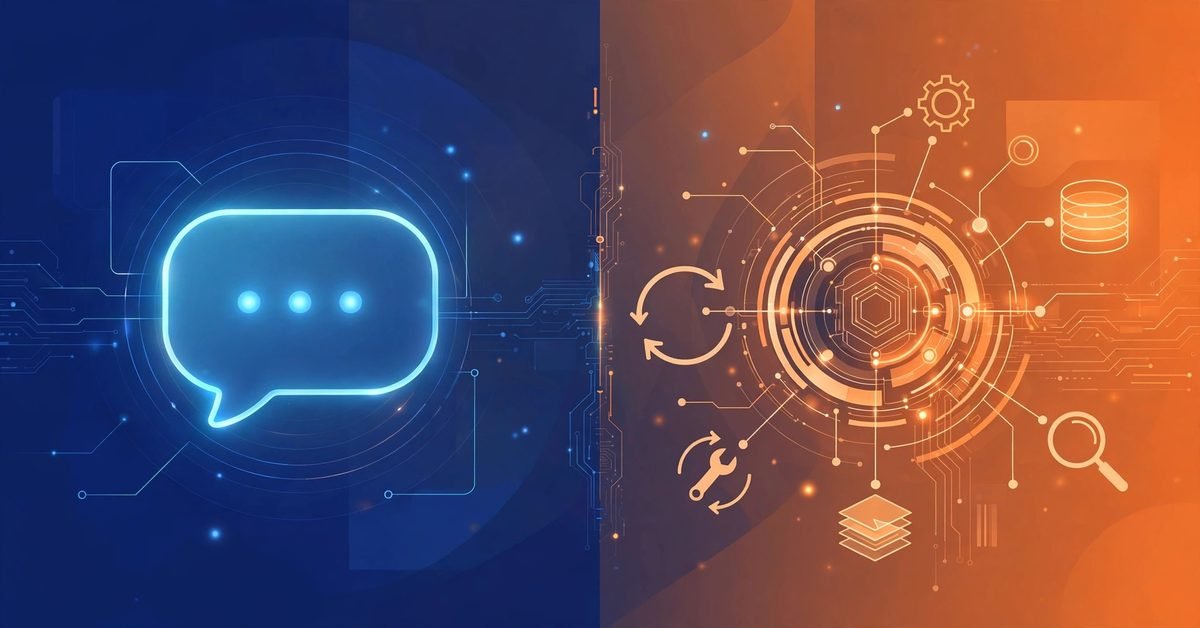
A chatbot is a conversational interface over knowledge. You type, it responds — drawing on training data or a knowledge base. The interaction starts and ends with words. Even the smartest chatbot in 2026 can’t do anything outside the chat window on its own.
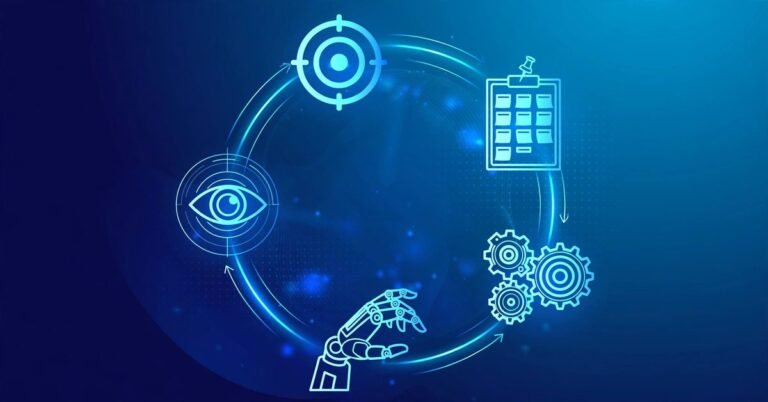
An AI agent is a goal-pursuing system with tools. It perceives (reads your email, checks a database), reasons (decides the next step), and acts (sends the email, updates the record, books the meeting) — looping through those steps until the goal is done. Conversation is just one of its interfaces.
Think of it this way: a chatbot is a brilliant advisor who never leaves the room. An agent is the advisor who walks out and gets it done.
The Same Request Through Both: “Chase My Unpaid Invoices”
Imagine you run a small design studio in Birmingham and say: “Chase my three unpaid invoices from last month.”
The chatbot writes you a lovely reminder-email template, suggests a polite tone for overdue clients, and outlines a follow-up schedule. Excellent advice. You still have to find the invoices, look up the clients, and send everything yourself.
The AI agent opens your accounting software, identifies the three overdue invoices, pulls each client’s details and payment history, drafts a personalized reminder per client, and pauses: “Here are the three drafts — approve to send, or edit first?” You approve; it sends, logs the follow-ups, and sets reminders to escalate in seven days.
Same request. The chatbot gave you homework; the agent did the job. That gap — between advising and executing — is the entire difference.

AI Agent vs Chatbot Difference: Side-by-Side Comparison
| Capability | Chatbot | AI Agent |
|---|---|---|
| What it does | Answers questions in conversation | Pursues goals through multi-step actions |
| How it decides | Picks the best response to your message | Plans a sequence of steps, then executes |
| Tools | None, or limited retrieval | APIs, browsers, apps, databases, code |
| Memory | Conversation history (often short) | Working memory across tasks + stored records |
| Initiative | Waits for your message | Can start tasks and follow up on its own |
| Typical cost | Low — often bundled free | Higher — per-task compute + tool calls |
| Failure mode | Wrong or unhelpful answer | Wrong action taken confidently |
| Best for | FAQs, guidance, brainstorming | Workflows: bookings, follow-ups, research, ops |
Where Chatbots Still Win (Honestly)
Agents get the headlines, but chatbots are still the right call surprisingly often:
- Speed and cost. A chatbot answers in seconds for pennies. An agent’s multi-step loop costs more compute and more time — overkill for “what are your opening hours?”
- Predictability. Chatbots follow the rails you set. Agents improvise, which is powerful but riskier — a 2026 field experiment on a large marketplace found agent-handled chats were faster but customer satisfaction actually dipped slightly. Early evidence, but a useful caution.
- Simple questions. If the job is pure Q&A — policies, product info, troubleshooting steps — a well-built chatbot or AI assistant is cheaper, faster, and easier to control.
The rule of thumb: if the task ends when the answer is given, use a chatbot. If the task begins when the answer is given, you need an agent.
Can They Work Together?
Absolutely — and this is the setup most small businesses actually end up with. The chatbot handles the front door: answering questions, qualifying the visitor, gathering details. When the conversation turns into work — “book the appointment,” “process my refund,” “chase that invoice” — it hands off to an agent that does the doing.
This division plays to each strength: the chatbot’s speed and low cost for the 80% of interactions that are just questions, the agent’s capability for the 20% that need action. You get most of the automation value at a fraction of the cost and risk of going full-agent everywhere.
FAQs
What is the AI agent vs chatbot difference in one sentence?
The AI agent vs chatbot difference in one sentence: a chatbot answers your questions, while an AI agent takes your goal and completes the multi-step work of achieving it using tools like email, browsers, and databases.
Is ChatGPT an AI agent?
ChatGPT’s basic chat mode is a chatbot — it answers but doesn’t act. Its newer agent-style modes, which browse the web, run code, and complete multi-step tasks, do qualify as AI agents. The same product can be both, depending on the mode.
Which is better for a small business: chatbot or AI agent?
Start with a chatbot for customer questions — it’s cheap and covers most interactions. Add an AI agent for one repetitive workflow (lead follow-up, invoice chasing, appointment booking) where the doing, not the talking, eats your hours. Expand only after it proves reliable.
Can a chatbot become an AI agent?
A chatbot becomes an AI agent when you give it tools, a goal, and a loop: the ability to act in external systems, an objective beyond answering, and the capacity to check results and retry. Without all three, it’s still a chatbot — however “agentic” the marketing sounds.
Do AI agents cost more than chatbots?
Yes, typically. Chatbots are cheap to run — often bundled into existing plans. Agents consume more compute per task and make paid tool/API calls, so vendors price them per task or per action. Budget for the value of the work done, not just the conversation.
Conclusion
The AI agent vs chatbot difference comes down to one thing: execution. Chatbots advise; agents act. Use chatbots where answers are enough, agents where work needs doing, and the two together for a setup that’s both affordable and genuinely useful.
The AI agent vs chatbot difference in one sentence: a chatbot answers your questions, while an AI agent takes your goal and completes the multi-step work of achieving it using tools like email, browsers, and databases.
ChatGPT’s basic chat mode is a chatbot — it answers but doesn’t act. Its newer agent-style modes, which browse the web, run code, and complete multi-step tasks, do qualify as AI agents. The same product can be both, depending on the mode.
Start with a chatbot for customer questions — it’s cheap and covers most interactions. Add an AI agent for one repetitive workflow (lead follow-up, invoice chasing, appointment booking) where the doing, not the talking, eats your hours. Expand only after it proves reliable.
A chatbot becomes an AI agent when you give it tools, a goal, and a loop: the ability to act in external systems, an objective beyond answering, and the capacity to check results and retry. Without all three, it’s still a chatbot — however “agentic” the marketing sounds.
Yes, typically. Chatbots are cheap to run — often bundled into existing plans. Agents consume more compute per task and make paid tool/API calls, so vendors price them per task or per action. Budget for the value of the work done, not just the conversation.